We’ve all been there. You sit down for “just one quick mission,” and suddenly it’s three hours later, your coffee is colder than a Skyrim mountaintop, and dinner somehow became a bag of chips that disappeared without your permission.
Sound familiar?
While gamers spend plenty of time upgrading characters, weapons, and skills, many forget about the most important piece of hardware in the room—their own body. The truth is, your brain is your most powerful gaming component, and just like a high-end graphics card, it performs best when it gets the right fuel.
Nutrition is only one piece of the puzzle. Staying properly hydrated is equally important for maintaining focus and quick reaction times during long gaming sessions. Check out our complete guide on Hydration for Gamers to learn more.
Whether you’re grinding ranked matches, exploring the massive world of GTA 6, or spending an entire weekend conquering your backlog, good nutrition can improve focus, reaction time, mood, and stamina. No, eating a salad won’t magically boost your K/D ratio, but it might help you avoid making decisions that would make even NPCs question your intelligence.
Let’s dive into how gamers can eat smarter without giving up the snacks they love.
Why Nutrition Matters More Than You Think
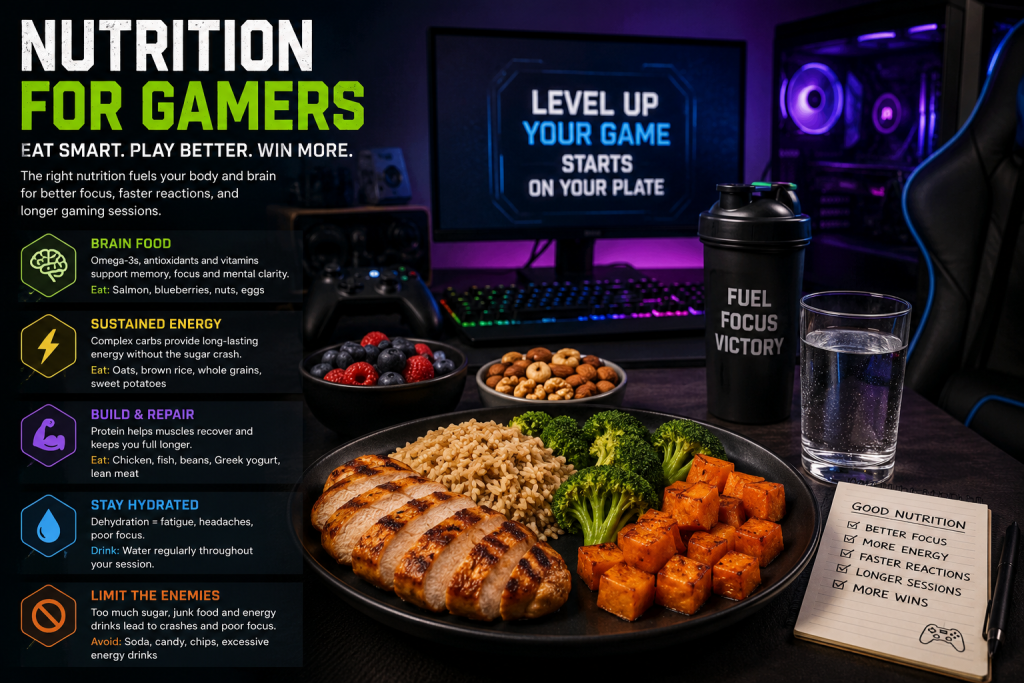
Gaming isn’t physically demanding in the same way as running a marathon, but mentally it’s another story.
Your brain consumes around 20% of your body’s daily energy, even though it only represents about 2% of your body weight. Every decision, every quick reaction, every strategy, and every perfectly timed dodge relies on a constant supply of nutrients.
Your brain also depends heavily on proper hydration. Even mild dehydration can reduce concentration and mental performance, which is why combining smart nutrition with adequate water intake creates the best gaming experience.
Poor eating habits often lead to:
- Brain fog
- Slower reaction times
- Reduced concentration
- Mood swings
- Mid-session energy crashes
- Increased fatigue
In other words, your character may have full health, but you’re running on 2 HP.
The Biggest Food Mistakes Gamers Make
1. Living on Sugar
Energy drinks, candy, cookies, and soda provide a quick burst of energy—but only temporarily.
Your blood sugar rises rapidly, giving you a brief feeling of alertness before crashing just as quickly. That’s usually when you start wondering why the loading screen suddenly feels more interesting than the actual game.
Instead of constant sugar spikes, aim for foods that release energy gradually.
2. Skipping Meals
Some players get so immersed that they forget to eat altogether.
Skipping meals often leads to overeating later, reduced concentration, headaches, and lower energy levels. Your brain doesn’t appreciate surprise fasting nearly as much as your favorite RPG protagonist.
3. Fast Food Every Gaming Night
Pizza has earned legendary status among gamers—and deservedly so—but relying on burgers, fries, and takeout every evening isn’t exactly a winning strategy.
Fast food tends to be high in saturated fats, sodium, and refined carbohydrates, leaving you feeling sluggish instead of energized.
Think of it this way: premium gaming PCs deserve premium electricity. Your body deserves premium fuel.
What Should Gamers Actually Eat?
The goal isn’t to become a nutrition expert overnight.
Instead, focus on balanced meals containing three essential components.
Complex Carbohydrates
Carbs aren’t the enemy—they’re your primary energy source.
Choose:
- Oatmeal
- Brown rice
- Whole-grain bread
- Sweet potatoes
- Quinoa
- Whole wheat pasta
These foods provide steady energy that lasts through long gaming sessions.
Protein
Protein keeps you full longer and supports muscle maintenance—even if your biggest workout today is reaching for the controller.
Great options include:
- Chicken
- Turkey
- Eggs
- Greek yogurt
- Cottage cheese
- Fish
- Beans
- Lentils
- Tofu
Aim to include some protein in every major meal.
Healthy Fats
Your brain absolutely loves healthy fats.
Good sources include:
- Avocados
- Almonds
- Walnuts
- Cashews
- Pumpkin seeds
- Olive oil
- Salmon
These foods support brain function while helping you stay satisfied between meals.
Smart Gaming Snacks
Nobody wants to cook a five-course meal in the middle of an online tournament.
Fortunately, healthy snacks don’t have to be complicated.
Here are some gamer-approved options:
- Apple slices with peanut butter
- Mixed nuts
- Greek yogurt with berries
- Banana and almonds
- Homemade popcorn
- Carrot sticks with hummus
- Cheese cubes
- Rice cakes with avocado
- Trail mix (watch the sugar content)
- Dark chocolate in moderation
Notice what’s missing?
A family-sized bag of potato chips pretending to be dinner.
Foods That Help Your Brain
Certain nutrients are particularly beneficial for cognitive performance.
Omega-3 Fatty Acids
Found in salmon, sardines, walnuts, and flaxseeds, omega-3s help support memory and brain function.
B Vitamins
These vitamins help convert food into energy.
Sources include:
- Eggs
- Whole grains
- Meat
- Dairy
- Leafy greens
Magnesium
Magnesium supports muscle function and may help reduce fatigue.
Good sources:
- Pumpkin seeds
- Spinach
- Almonds
- Dark chocolate
Finally, science has given us another excuse to enjoy chocolate. Just don’t interpret that as permission to eat an entire chocolate cake.
Meal Timing for Long Gaming Sessions
Timing matters almost as much as what you eat.
Before Gaming
Eat a balanced meal about one to two hours before playing.
Example:
- Grilled chicken
- Brown rice
- Vegetables
or
- Oatmeal
- Greek yogurt
- Banana
This provides sustained energy without making you feel overly full.
During Gaming
If you’re gaming for several hours, keep light snacks nearby.
Good choices include fruit, nuts, yogurt, or whole-grain crackers.
Avoid heavy meals that make you feel sleepy halfway through an important mission.
After Gaming
Recovery isn’t only for athletes.
After an especially long session, eat a balanced meal containing protein, vegetables, and complex carbohydrates.
Your future self will thank you tomorrow morning.
The Caffeine Question
Coffee has practically become official gamer equipment.
Used wisely, caffeine can improve alertness and concentration.
However, more isn’t always better.
Too much caffeine may cause:
- Anxiety
- Shaking
- Reduced sleep quality
- Increased heart rate
- Difficulty concentrating
Try limiting caffeine later in the evening if you value sleep more than watching the sunrise unintentionally.
And remember: energy drinks are not a personality trait.
Meal Prep: The Secret Weapon
One reason gamers rely on unhealthy food is convenience.
The solution?
Meal prep.
Cooking several balanced meals in advance means you can spend more time gaming and less time wondering what to eat.
Simple ideas include:
- Chicken with rice
- Turkey wraps
- Pasta with vegetables
- Overnight oats
- Egg muffins
- Fruit containers
- Mixed nuts in small portions
Future You will appreciate the effort, especially during marathon gaming weekends.
You Don’t Need a Perfect Diet
Good nutrition isn’t about eliminating every cookie from your life.
It’s about consistency.
If 80–90% of your meals are balanced, there’s absolutely room for pizza night with friends or your favorite burger after finally beating that impossible boss.
Food should support your gaming—not become another side quest.
Final Thoughts
Your gaming setup may include an ultra-wide monitor, a mechanical keyboard, RGB lighting, and lightning-fast internet, but none of those upgrades matter if your brain is running on processed sugar and wishful thinking.
Eating balanced meals, choosing smarter snacks, and planning ahead won’t instantly turn you into a professional esports player, but they can help you stay focused, maintain steady energy, and simply feel better during long gaming sessions.
Think of nutrition as your real-life character build. Every healthy meal adds another skill point toward better focus, quicker thinking, and more enjoyable gaming.
Ready to level up even further?
Good nutrition is only half the equation. Read our complete Hydration for Gamers guide to learn how water can improve focus, reduce eye strain, and help you stay sharp during long gaming sessions.